
Cottage gardens are full of color combinations that translate naturally into crochet headscarf inspiration: faded roses against green leaves, tiny blue flowers beside cream petals, sunny marigolds, soft lavender, and loose mixed bouquets.
These 12 ideas explore different ways that floral color, edging, openwork, motif placement, and scarf silhouettes can create distinctly romantic, cheerful, vintage-inspired, or understated looks. Use them as creative references when comparing palettes, deciding how noticeable you want floral details to feel, planning warm-weather accessories, or saving styling directions for a future crochet project.
About These Ideas
These headscarf concepts are intended for visual inspiration, color exploration, style comparison, and creative planning. Borrow a palette, border idea, silhouette, floral mood, or decorative detail that suits your own direction rather than treating any one look as an exact construction guide.
Quick Idea Finder
| If you like… | Consider… | Visual mood |
|---|---|---|
| Romantic garden colors | Rose Trellis or Sweet Pea | Soft and feminine |
| Fresh blue palettes | Forget-Me-Not or Cornflower | Light and breezy |
| Cheerful florals | Daisy Chain or Chamomile | Casual and sunny |
| Rich warm tones | Wild Poppy or Marigold Border | Bold and seasonal |
| Vintage cottage character | Hollyhock or Foxglove | Layered and nostalgic |
| Mixed garden color | Cottage Bouquet | Eclectic and decorative |
Before You Choose
Think first about how much floral detail you want the headscarf to carry. A simple cream or sage base lets small motifs and colorful edging stand out, while a multicolor scarf creates a busier cottage-garden effect. Also compare silhouette and visual weight: airy openwork feels lighter, dense texture looks more substantial, and decorative borders draw attention toward the face and tied ends. For everyday styling, consider how the scarf colors will sit beside denim, linen, soft knits, floral dresses, or neutral summer layers.
1. Crochet Rose Trellis Headscarf
 Save
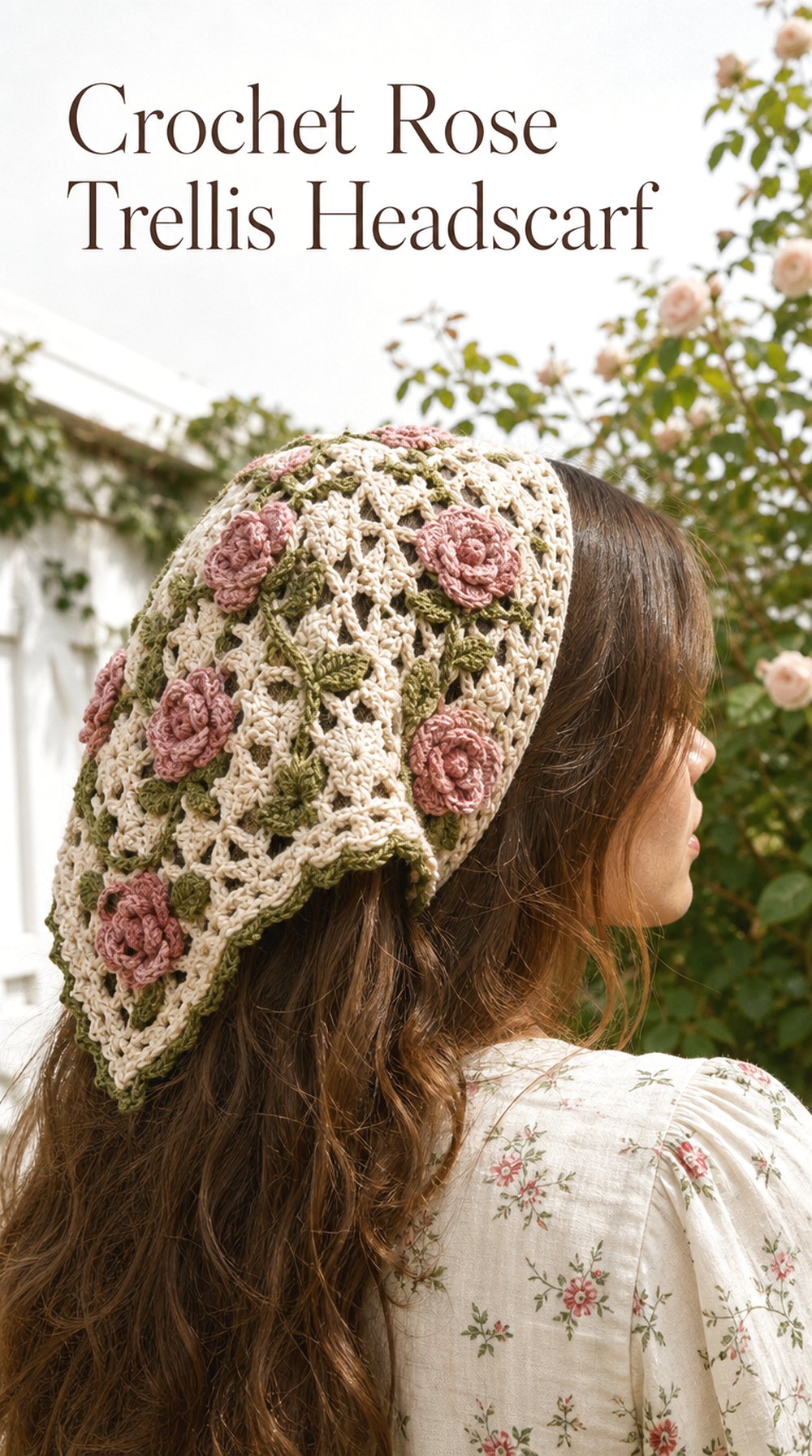
SaveA rose-inspired headscarf can capture the layered look of climbing flowers without needing every surface to feel busy. Picture a warm cream or oatmeal base softened with dusty rose accents and small touches of moss green. Floral details concentrated along the edging or near the scarf points would create a graceful frame while leaving the central crochet texture calm and wearable.
Why the Garden Palette Works
Dusty rose has enough color to feel romantic without becoming overly sweet, especially when grounded by cream and muted green. The combination recalls faded garden roses and leafy trellises, giving the scarf a gently vintage character.
Keeping the green accents limited also helps the floral shades remain the visual focus. Too much green could shift the scarf toward a stronger botanical pattern rather than a soft rose-inspired accessory.
Border Detail to Borrow
A decorative edge is a natural place to introduce the rose theme. Small rounded floral shapes, leafy accents, or a subtly scalloped border could give the perimeter more personality while preserving a clean overall silhouette.
For a quieter interpretation, use the rose shade only along the final visible edge. For more impact, repeat small floral color notes at the scarf corners or tied ends.
Outfit Pairing
This direction would sit comfortably beside cream blouses, faded denim, linen dresses, soft brown leather accessories, or muted floral prints. A dusty rose scarf can also add warmth to an otherwise neutral outfit without feeling overly bright.
2. Crochet Lavender Meadow Headscarf
 Save
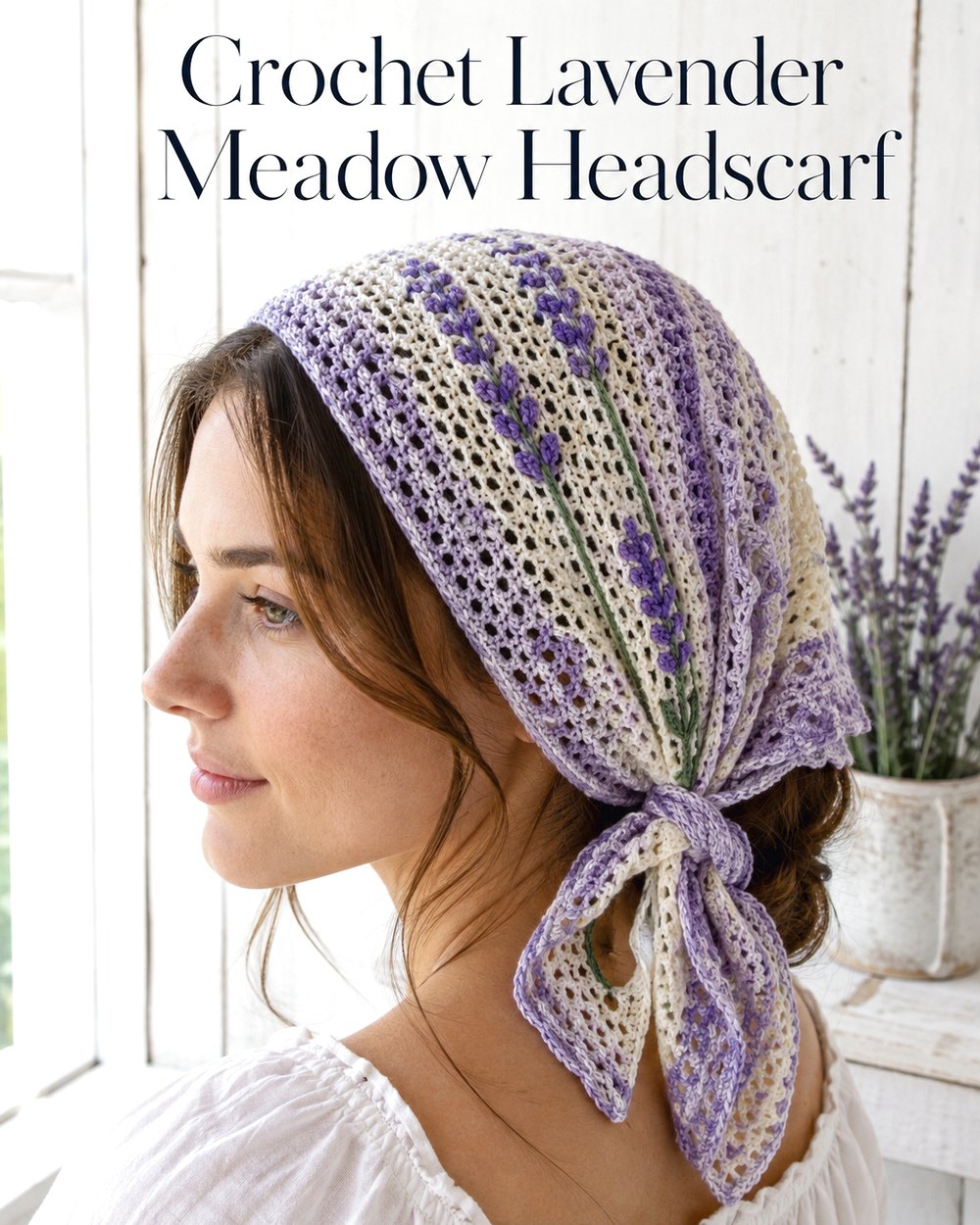
SaveThe Lavender Meadow concept leans into airy texture and cool, hazy color. Soft lavender, ivory, and just a hint of gray-green can suggest rows of flowering herbs moving through a cottage border. An open, light-looking crochet surface would complement the palette particularly well, creating a headscarf that feels relaxed rather than heavily decorated.
Texture Direction
Lavender-inspired styling benefits from visible spaces between stitches because the lighter texture echoes the loose, slender look of lavender stems. A dense surface would feel warmer and more structured, while openwork gives the scarf a breezier garden mood.
A simple border can keep the open texture from competing with the delicate palette.
Color Mood
Use lavender as either the dominant shade or a restrained accent. A mostly ivory scarf with lavender detailing feels subtle and easy to coordinate, while a lavender base creates a more noticeable pastel statement.
Muted sage or soft gray-green can provide just enough contrast to prevent the palette from becoming flat.
Where This Look Fits
The soft colors suit spring and summer wardrobes, garden-party styling, light vacation outfits, and romantic cottagecore-inspired looks. It could also work as a gentle color accent with white linen, pale denim, or oatmeal knits.
3. Crochet Daisy Chain Headscarf
 Save
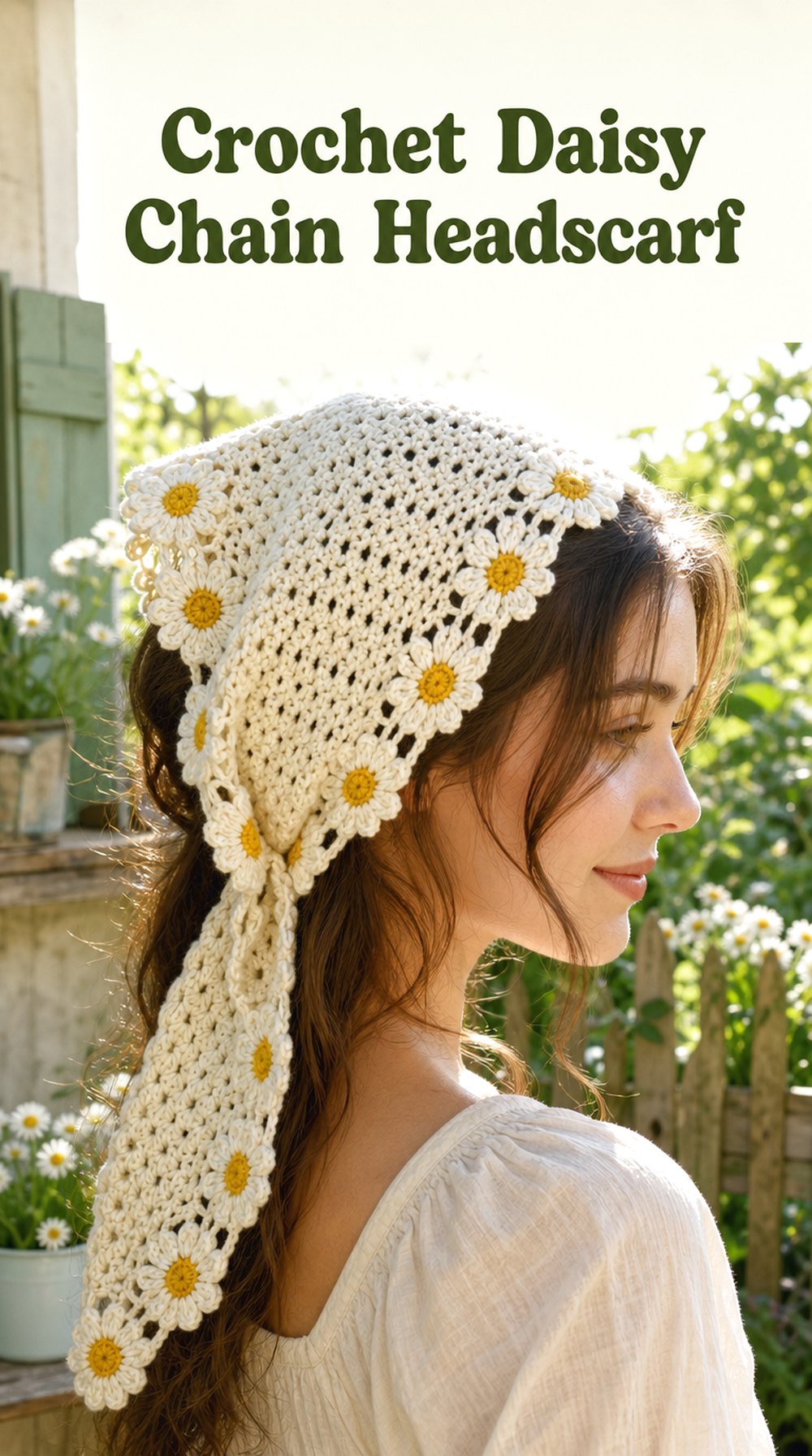
SaveDaisies bring a brighter, more playful energy to cottage garden inspiration. A cream scarf scattered or edged with small white-and-golden floral accents can feel cheerful without relying on a large multicolor palette. The strongest version keeps the daisy details simple and repetitive so they read as a fresh decorative rhythm rather than a crowded floral surface.
Visual Focus
The yellow centers naturally become tiny points of contrast. Against cream, white, or pale beige crochet, they can give the entire scarf a sunny appearance even when the flower details remain small.
Spacing matters visually. Leaving open areas between floral accents keeps each daisy recognizable and gives the crochet texture room to show.
A Playful Direction
For a more youthful look, bring a few daisies toward the scarf corners or along the section that frames the hairline. This makes the floral theme more noticeable when the scarf is worn.
A slightly scalloped edge could reinforce that playful character without adding another strong color.
Everyday Styling
Daisy-inspired headscarves pair easily with casual denim, white tops, picnic dresses, gingham, and simple summer layers. The cream-and-yellow palette also works well when you want cottage style without a strongly pastel appearance.
4. Crochet Forget Me Not Blue Headscarf
 Save
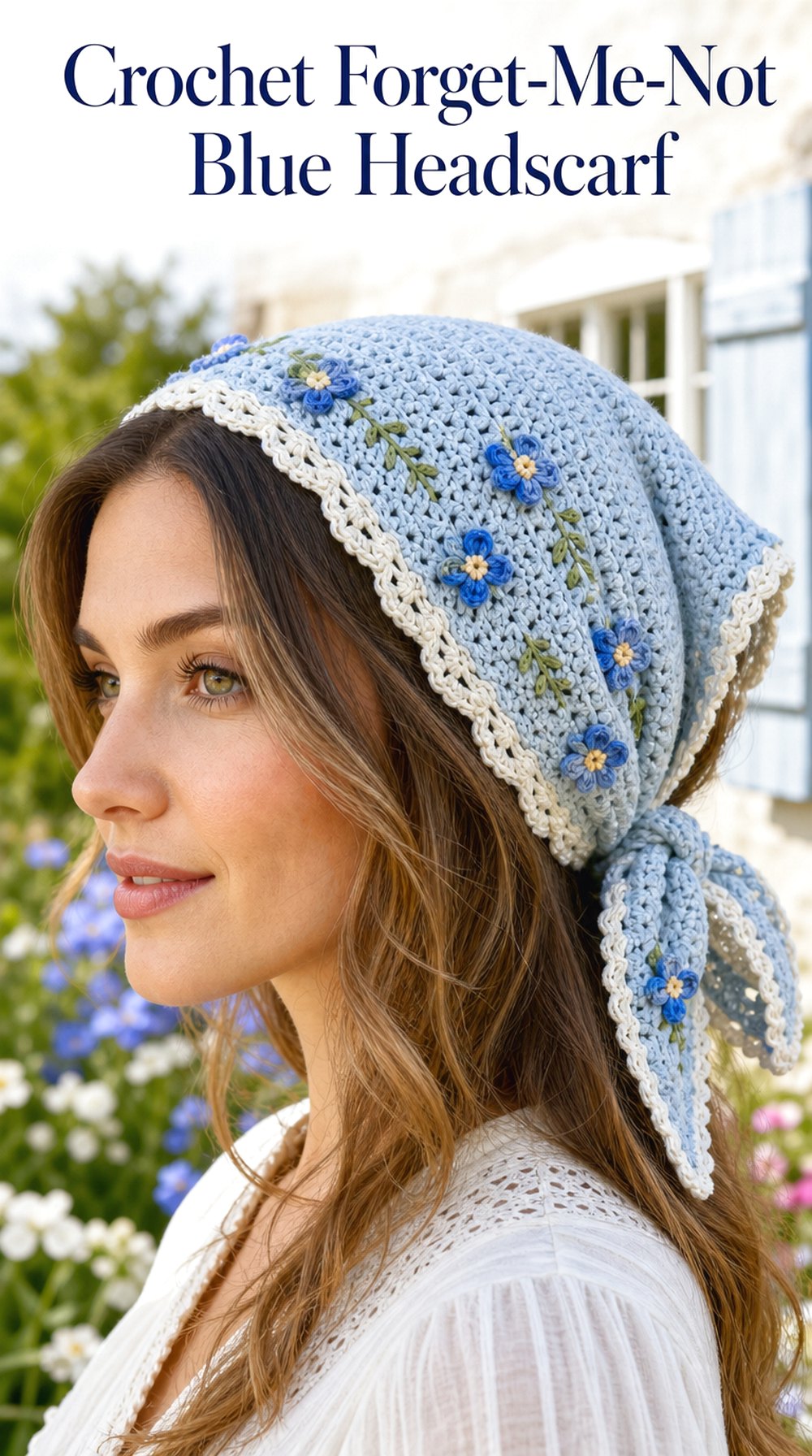
SaveForget-me-nots offer a cooler interpretation of garden florals, built around pale blue, deeper blue accents, cream, and small touches of soft green. The palette feels fresh and delicate, making it especially appealing for a headscarf with restrained floral details. A clean triangular silhouette would let those tiny pops of blue become the main decorative element.
Color Balance
Using two blue values creates more depth than relying on a single shade. Pale blue can form the larger visual field, while richer cornflower or denim blue adds definition to smaller flower-inspired details.
Cream edging is useful for softening the transition and keeping the scarf from feeling overly cool.
The Detail That Changes It
Tiny concentrated accents can make this concept feel refined rather than heavily floral. Instead of covering the entire scarf, imagine small blue motifs appearing along one edge or near the lower point.
That asymmetry could make the scarf feel more modern while still keeping its cottage garden reference.
A Softer Variation
For an especially understated version, reverse the palette: use cream as the main color and reserve both blues for the decorative edge. The floral inspiration remains recognizable, but the scarf becomes easier to pair with a wider range of clothing.
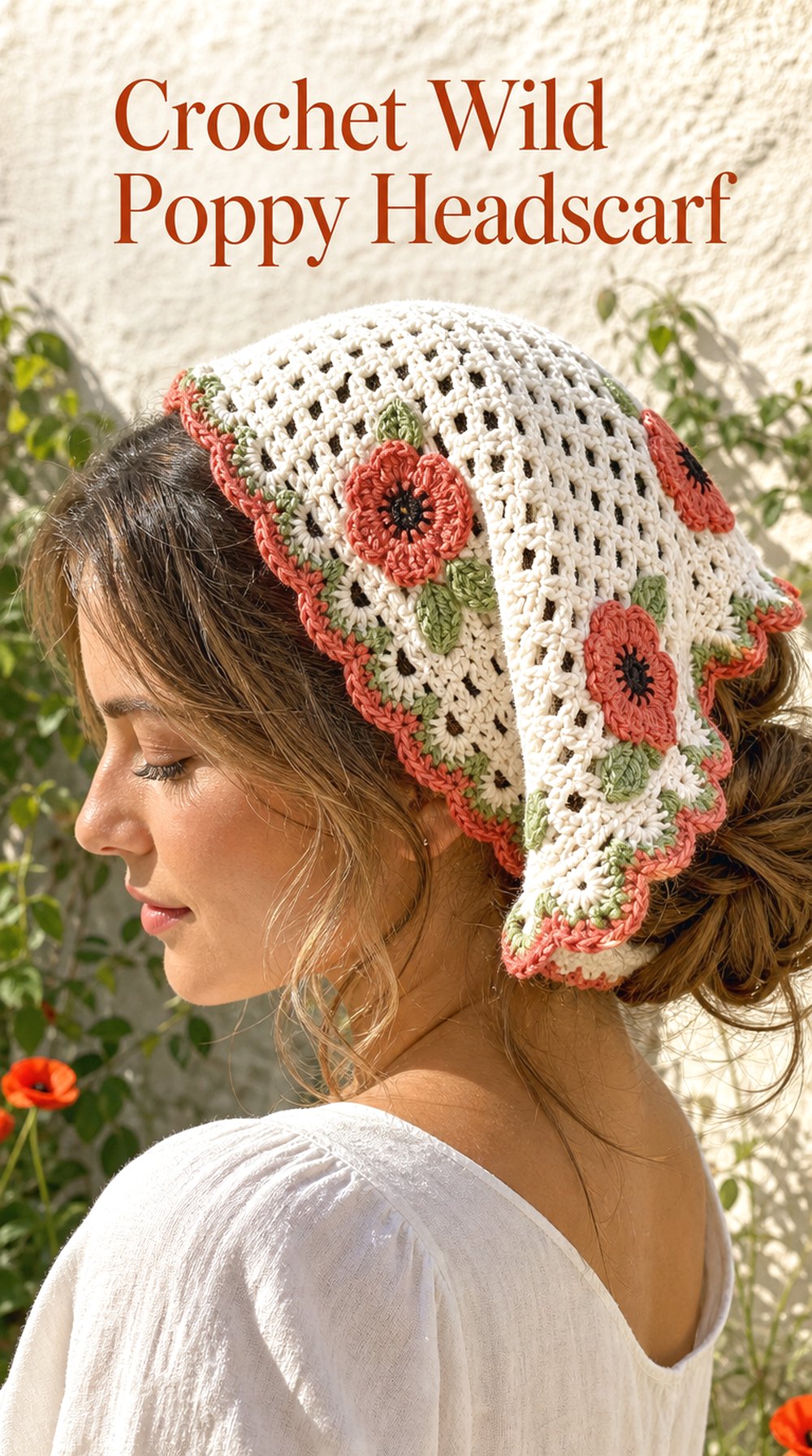
5. Crochet Wild Poppy Headscarf5.
 Save
SaveWild poppies suggest stronger contrast than many cottage flowers, making this direction ideal for anyone drawn to warm color. An ivory or natural base with coral, tomato red, faded scarlet, and muted green accents creates an energetic scarf while still leaving room for visible crochet texture. The floral inspiration works best when the red appears in focused areas rather than covering every section.
Statement Element
Poppy red naturally commands attention, so even a small border or a few floral-inspired accents can become the scarf’s strongest feature. This makes the concept a useful choice for simple outfits that need one noticeable accessory.
Keeping the base pale gives the brighter color enough breathing room.
Warm-Weather Styling
The palette feels particularly suited to summer dresses, light cotton shirts, denim, woven bags, and earthy sandals. Coral-red also sits nicely beside sun-washed neutrals such as flax, sand, and cream.
For early fall, introduce slightly deeper rust or brick accents to warm the look further.
Creative Variation
A less literal version could skip distinct flower shapes and simply borrow poppy colors through blocks, stripes, or a contrasting edge. The scarf would still carry the same garden mood while feeling cleaner and more graphic.
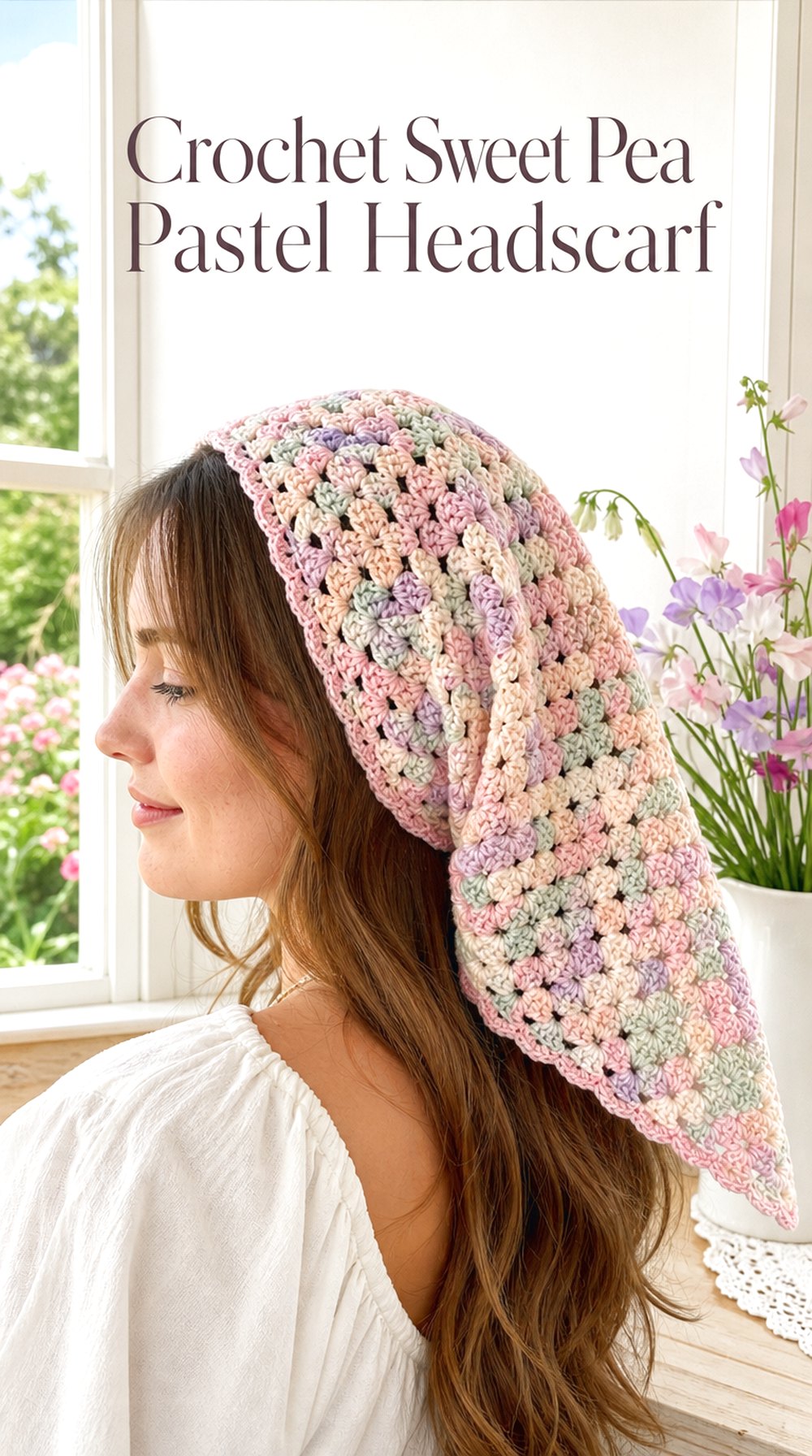
6. Crochet Sweet Pea Pastel Headscarf
 Save
SaveSweet peas invite a softer mix of color rather than one dominant flower shade. Blush, lilac, pale peach, mint, and cream can blend into a headscarf that feels light, romantic, and slightly whimsical. Because the palette already offers plenty of visual interest, the silhouette and crochet texture can remain relatively simple, allowing the color transitions to carry the garden influence.
Pastel Harmony
These colors work because none needs to be extremely saturated. Keeping each shade slightly softened helps them sit together like a faded cottage border rather than a rainbow.
Cream can act as visual breathing room between pink, lilac, and peach, while mint provides a quiet leafy note.
Shape Inspiration
A softly draped triangular scarf suits this palette particularly well. The gentle shape complements the romantic colors and allows several shades to appear without making the accessory feel bulky.
Longer-looking ties can also create an attractive finishing detail when the scarf is viewed from the side or back.
Romantic Styling Direction
Pair this mood with pale denim, ivory tops, soft cardigans, floral skirts, or simple dresses in one of the scarf’s quieter shades. For a less overtly feminine interpretation, reduce the pink and emphasize lilac, cream, and muted mint.
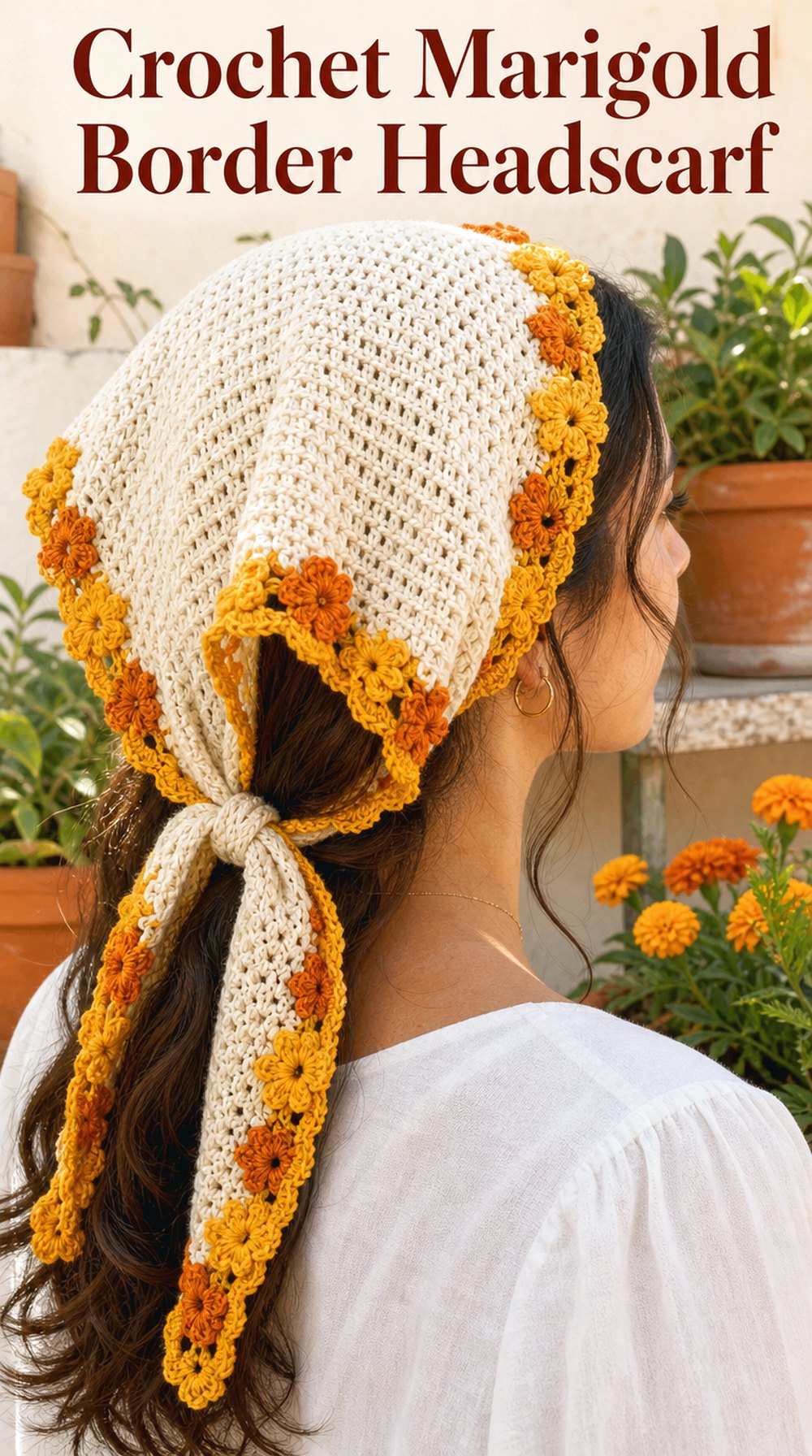
7. Crochet Marigold Border Headscarf
 Save
SaveA marigold-inspired scarf brings golden yellow, burnt orange, warm cream, and hints of leaf green into the collection. Rather than spreading those vivid tones across the entire piece, concentrating them along the border creates a strong frame. The result can feel cheerful in summer and warmly seasonal as autumn approaches, depending on the surrounding colors.
Why the Border Matters
Marigold tones are naturally vibrant, so a defined edge can deliver plenty of impact. Keeping the center neutral prevents the scarf from competing visually with patterned clothing.
The border also draws attention to the scarf’s triangular outline and tied corners, making silhouette part of the design.
Seasonal Twist
For summer, lean toward butter yellow and light golden orange with plenty of cream. For an autumn version, deepen the orange toward rust and bring in warm brown or olive accents.
The same flower inspiration can therefore shift seasonally without changing its overall character.
Texture Contrast
A simple center paired with a more decorative perimeter can make the scarf feel thoughtfully layered. Bobble-like visual texture, rounded floral forms, or small scalloped details would make the warm border look especially tactile.
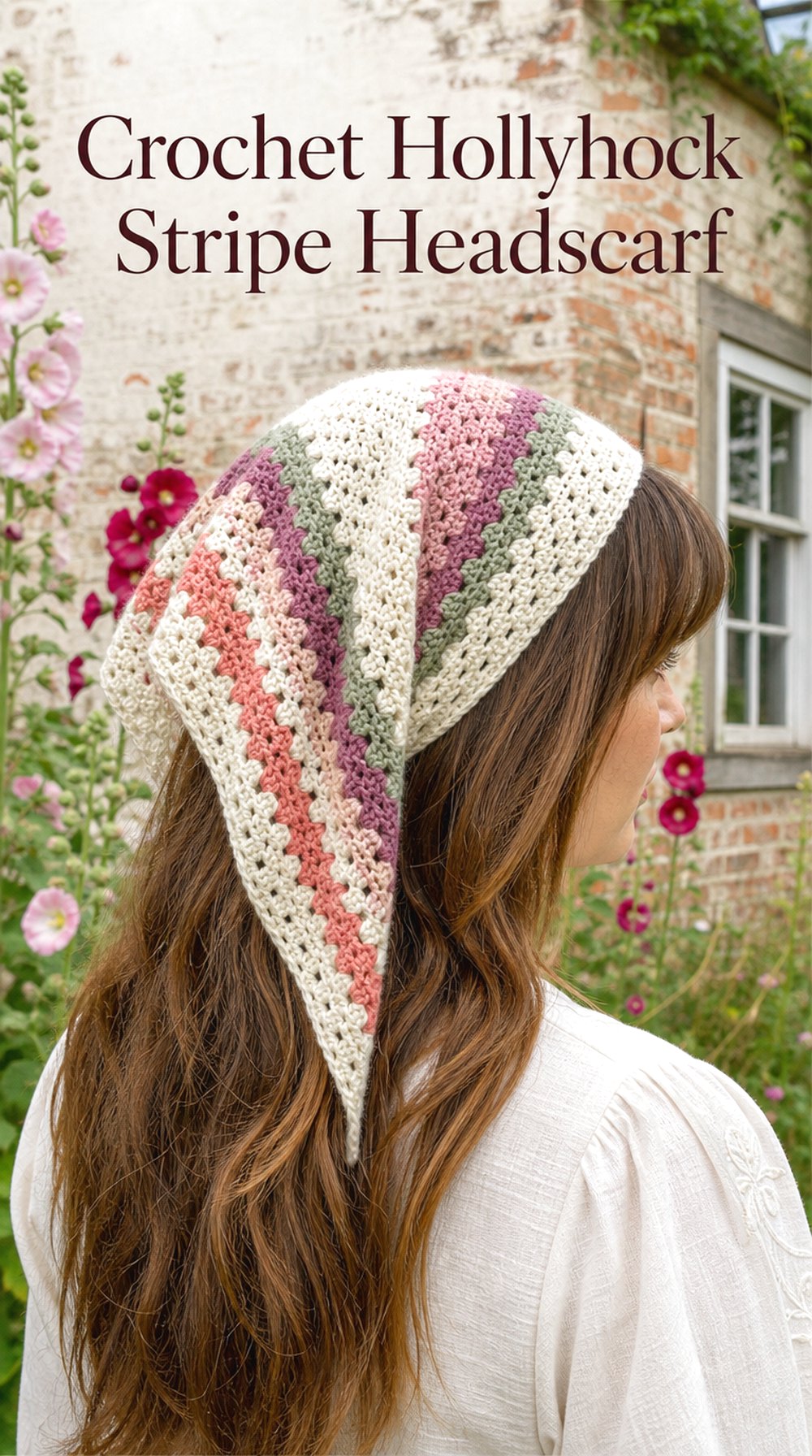
8. Crochet Hollyhock Stripe Headscarf
 Save
SaveTall hollyhocks create bands of pink, coral, plum, cream, and green as they climb through cottage gardens. Translating that impression into striped or directional color placement gives this headscarf a more graphic personality than scattered floral motifs. It is a useful concept for anyone who loves garden colors but prefers the clarity of stripes, panels, or repeated color sections.
Modern Update
Instead of treating each flower literally, let the hollyhock palette appear as structured color bands. This creates a cleaner accessory while preserving the recognizable garden influence.
Diagonal or slightly irregular-looking color placement could keep the composition from feeling overly formal.
Visual Balance
Muted plum provides depth, while faded pink and coral add warmth. Cream can separate stronger colors so individual shades remain distinct rather than blending into one heavy block.
Sage works best as a restrained accent, echoing foliage without dominating the flower colors.
Vintage-Inspired Touch
The combination of faded pinks and deeper plum naturally suits old-cottage styling. Pair it with textured knits, linen, soft denim, or a simple blouse to bring out the nostalgic side of the palette.
9. Crochet Chamomile Picnic Headscarf
 Save
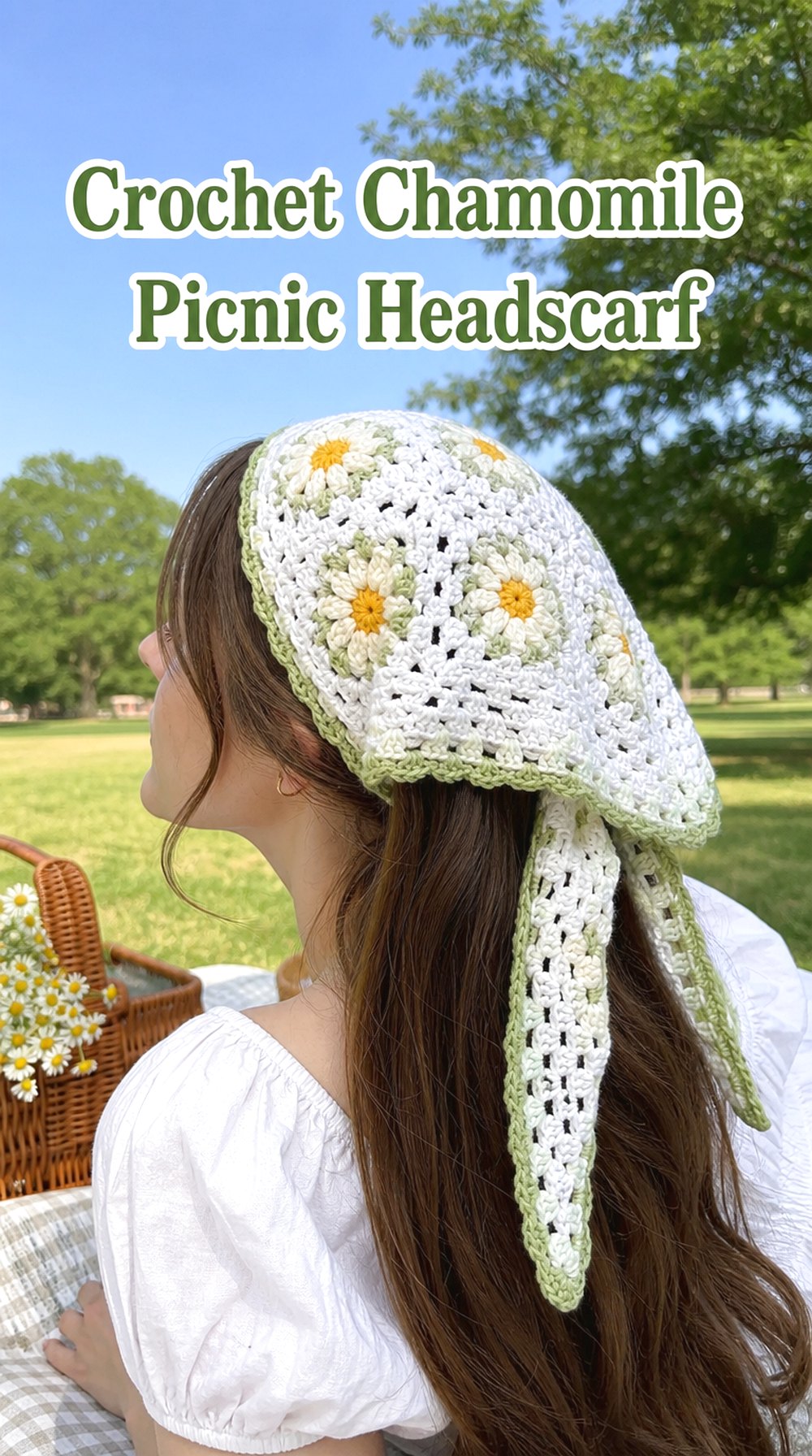
SaveChamomile offers one of the cleanest cottage garden palettes: white or cream petals, sunny yellow centers, and fresh green foliage. That simplicity suits a casual crochet headscarf with an easy, cheerful feel. Small yellow accents can make a pale scarf look lively without introducing numerous colors, while a green border gives the design enough definition to stand out outdoors.
Practical Style Angle
This concept works particularly well when the main scarf stays light and neutral. Pale colors feel fresh for warm-weather styling and make the smaller decorative accents easy to notice.
The overall effect is casual enough for everyday outfits rather than feeling reserved for a themed look.
Picnic Palette
Cream, butter yellow, soft white, and fresh herb green naturally complement woven baskets, gingham, denim, and linen. The colors can feel sunny without becoming overly bright.
For a softer interpretation, replace vivid yellow with a muted golden tone.
Detail Worth Borrowing
A narrow green edge can make the whole design look more finished while echoing flower stems and leaves. If you want less contrast, use pale sage rather than stronger green for a gentler cottage feel.
10. Crochet Foxglove Cottage Headscarf
 Save
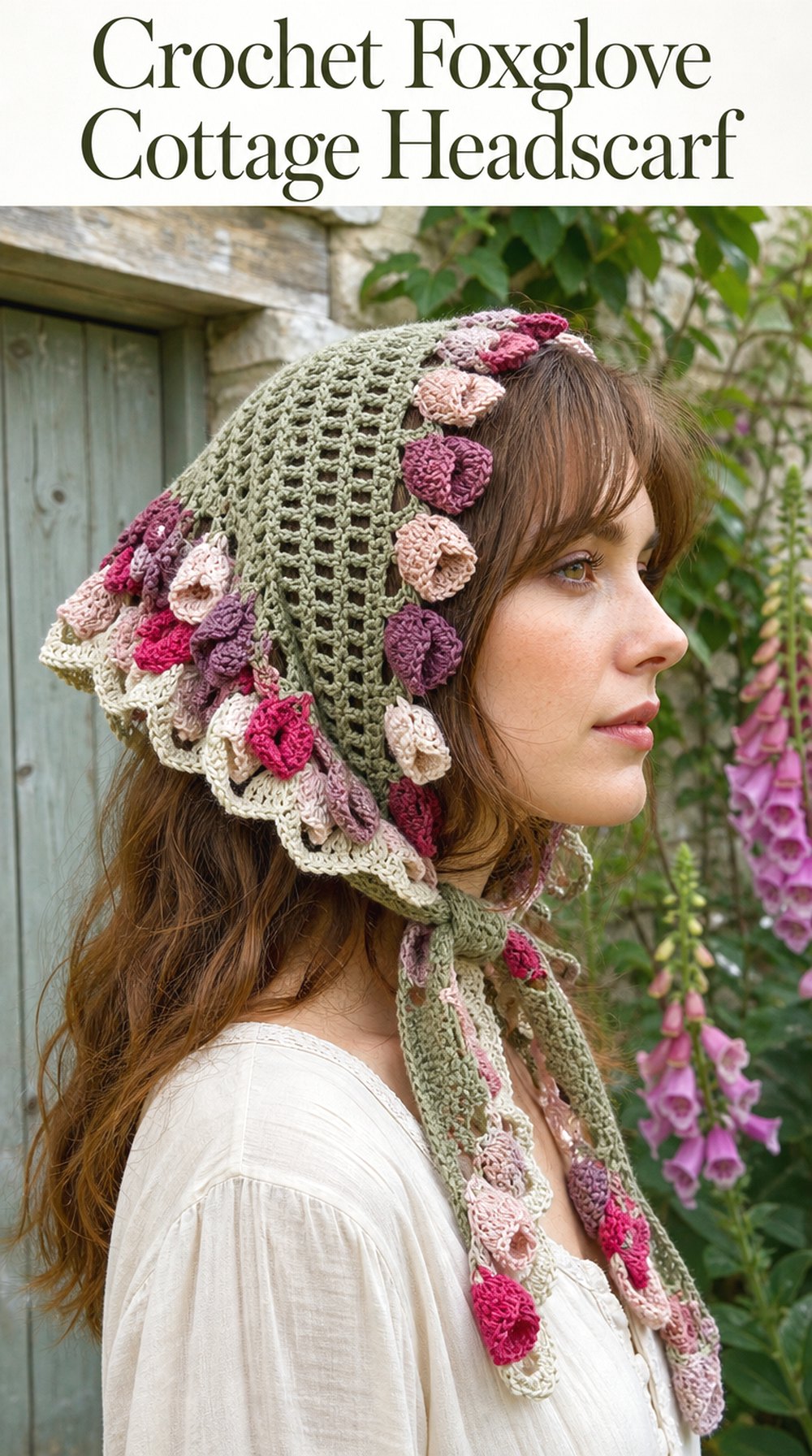
SaveFoxgloves bring deeper, moodier flower tones into the cottage garden palette. Dusty mauve, raspberry, blush, cream, and muted sage can create a headscarf with more visual depth than the lighter pastel concepts. This look works especially well when the scarf maintains a calm overall silhouette and lets richer floral accents appear in a few carefully chosen areas.
What Makes It Stand Out
Mauve and raspberry add drama without pushing the palette into extremely dark territory. Combined with sage, they create a sophisticated botanical mood that still feels rooted in a traditional garden.
Cream prevents the deeper shades from becoming too heavy around the face.
Placement Idea
Consider keeping stronger color near the border, corners, or lower triangular point. This leaves the area closest to the hairline quieter while allowing the decorative section to remain visible.
A few vertically arranged accents could also echo the tall shape of foxglove flower spikes.
A Bolder Variation
For a richer look, use sage or muted plum as the dominant field instead of cream. Blush and raspberry details will appear more pronounced against the darker background, giving the scarf a stronger late-summer or early-fall character.
11. Crochet Cornflower Lace Headscarf
 Save
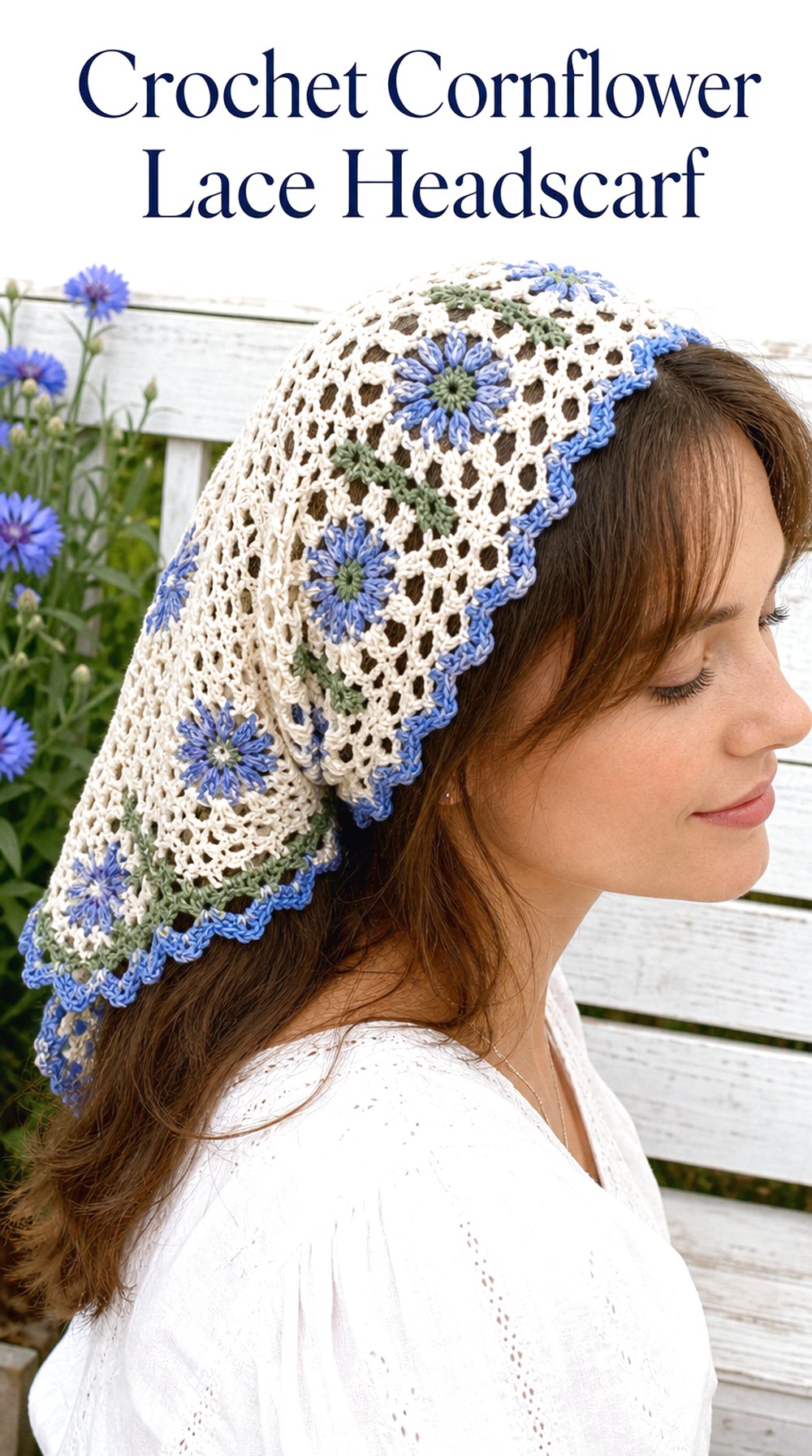
SaveCornflower blue against ivory creates one of the crispest palettes in this collection. Pairing those colors with an airy, lace-like crochet surface gives the scarf a light garden quality while keeping the design visually clean. Blue accents can appear as edging, small motifs, or concentrated areas, making this concept adaptable to both minimal and more decorative cottage-inspired styling.
Airy Visual Texture
Openwork complements cornflower blue because both carry a light, summery feeling. Visible negative space prevents the scarf from looking visually dense and allows hair color to become part of the overall composition.
A restrained edge can keep the texture from becoming overly ornate.
Color Contrast
Clear blue against ivory is stronger than many pastel combinations, yet it still feels fresh rather than heavy. A tiny amount of green can reinforce the botanical inspiration, but the scarf does not need it to feel complete.
For a calmer version, use faded blue instead of a vivid cornflower shade.
Minimal Cottage Style
This direction works well for readers who like cottage influences but prefer fewer decorative elements. The flower reference can come mainly from color, allowing texture and silhouette to take the lead.
12. Crochet Cottage Bouquet Headscarf
 Save
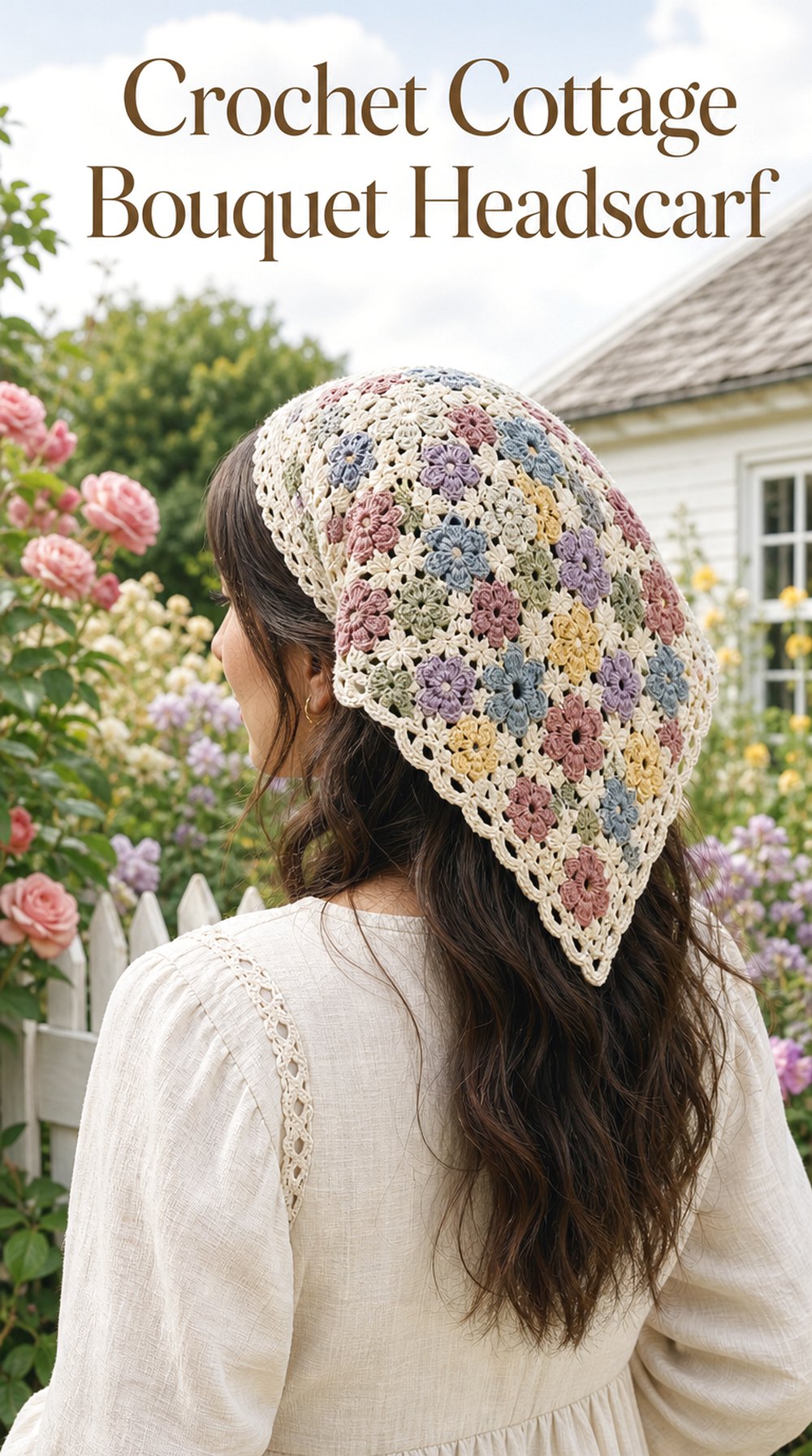
SaveThe Cottage Bouquet concept gathers several garden colors into one scarf: dusty rose, lavender, faded blue, butter yellow, sage, and warm cream. Rather than highlighting a single flower, it captures the irregular charm of a mixed garden border. The key is giving each shade enough space so the scarf feels collected and layered rather than visually crowded.
Color Mood
Warm cream is a useful anchor for a mixed palette because it connects cool lavender and blue with warmer rose and yellow. Sage can appear between floral shades as a quiet botanical bridge.
Keeping the colors slightly muted gives the scarf a cohesive, lived-in cottage character.
Visual Balance
Scattered accents work best when the scarf still has clear areas of calmer texture. Leaving some sections mostly neutral helps the eye move between decorative points rather than seeing one continuous field of color.
You could also concentrate the richest mix toward the border and keep the crown more understated.
Personalization Potential
This concept is especially easy to adapt around favorite flower colors. Someone drawn to pink gardens could emphasize rose and mauve, while a cooler interpretation might focus on lavender and faded blue.
It also provides plenty of inspiration for matching ties, edging, tassel-like accents, or small decorative motifs.
Comparing the Headscarf Styles
| Direction | Best visual feature | Overall effect |
|---|---|---|
| Rose Trellis | Floral border | Romantic |
| Lavender Meadow | Airy texture | Calm |
| Daisy Chain | Repeated motifs | Playful |
| Forget-Me-Not | Tiny blue details | Delicate |
| Wild Poppy | Bold contrast | Energetic |
| Sweet Pea | Mixed pastels | Soft |
| Marigold Border | Warm edging | Sunny |
| Hollyhock Stripe | Graphic color bands | Vintage-modern |
| Chamomile Picnic | Simple light palette | Casual |
| Foxglove Cottage | Deeper florals | Moody |
| Cornflower Lace | Blue openwork | Fresh |
| Cottage Bouquet | Mixed garden palette | Eclectic |
Cottage Garden Color Inspiration
A few palette directions can quickly change the character of a crochet headscarf. Rose garden combines dusty pink, moss, and warm cream; summer meadow mixes lavender, cornflower blue, ivory, and sage; sunny cottage uses butter yellow, marigold orange, cream, and fresh green; faded bouquet brings together blush, mauve, antique blue, soft peach, and oatmeal. Keeping one shade dominant usually helps a multi-flower palette feel more intentional.
Make the Idea Your Own
You do not need to use floral details literally to borrow from these concepts. Try translating a favorite flower into edging color, a narrow stripe, scattered motifs, a contrasting tie, or one decorative corner. You can also change the scarf’s visual personality through silhouette: a smaller triangular shape feels neat and casual, while a more draped appearance feels romantic. Scallops, openwork, ribbed-looking texture, fringe-like finishing details, and color blocking can each push the same palette in a different direction.
Using the Inspiration
Save the ideas that immediately catch your eye, then compare what they have in common. You may discover that you consistently prefer pale bases, blue accents, decorative borders, mixed pastels, or simpler floral references. Those patterns can help when building a mood board, planning a seasonal accessory palette, comparing headscarf shapes, exploring gift directions, or deciding which visual details are worth carrying into a future crochet project.
Who These Ideas Are For
This collection is useful for crochet lovers exploring cottagecore style, floral accessories, warm-weather headscarves, garden-inspired color palettes, or softer vintage influences. It can also help anyone comparing decorative borders, openwork looks, subtle motifs, and multicolor styling before settling on a preferred direction.
FAQ
Do crochet headscarves need obvious flower motifs to feel garden-inspired?
No. Floral inspiration can come entirely from color. Dusty rose with moss green may suggest roses, while ivory and cornflower blue can recall summer flowers even when the crochet surface stays simple.
Which cottage flower palette is easiest to style?
Cream combined with one main floral shade is especially versatile. Rose, lavender, cornflower blue, or marigold can each provide personality while the neutral base keeps the headscarf easy to pair with everyday clothing.
How can I keep a multicolor headscarf from looking too busy?
Choose one dominant background color and let the other shades appear in smaller areas. Repeating colors thoughtfully along an edge or in spaced motifs also creates more visual order than distributing every shade equally.
What gives a crochet headscarf a more vintage cottage feel?
Faded floral colors, warm cream, sage green, scalloped-looking edges, textured borders, and softly mixed palettes all contribute to a nostalgic cottage mood. Dusty rather than highly saturated colors tend to reinforce that effect.
Which ideas feel most modern?
The Hollyhock Stripe and Cornflower Lace concepts offer especially clean directions. Structured color placement, limited palettes, and airy texture can keep the cottage influence recognizable while creating a simpler contemporary look.
How can I make the floral influence more subtle?
Use the flower only as a palette reference. A cream scarf with a thin lavender edge or an ivory scarf with small blue accents can suggest the garden inspiration without relying on prominent decorative motifs.
Conclusion
Cottage garden flowers offer far more than literal floral decoration. Their palettes, proportions, contrasts, and irregular color combinations can inspire everything from a quiet cream-and-blue headscarf to a richly mixed bouquet design. Save the concepts that match your style, compare their borders and color balance, and borrow one detail—perhaps a dusty rose edge, a poppy-red accent, or an airy cornflower-blue texture—as the starting point for your own crochet direction.
