
French countryside style has an easy way of making practical pieces feel romantic without becoming overly fussy. Crochet hair scarves fit naturally into that mood, especially when they borrow colors from faded shutters, herb gardens, wildflowers, linen, stone cottages, and sunny village markets.
This collection explores 17 visual directions ranging from delicate ivory openwork to earthy olive, muted terracotta, soft plum, and playful floral motifs. Use the ideas as inspiration for comparing scarf silhouettes, edging styles, color palettes, decorative details, and ways a crochet hair accessory might complement cottage-inspired outfits or seasonal wardrobes.
About These Ideas
These concepts are meant for visual inspiration, style comparison, color exploration, and creative planning. Look at the palettes, shapes, motifs, borders, and styling details you enjoy, then borrow those elements when developing your own crochet direction.
Quick Idea Finder
| If you like… | Consider… |
|---|---|
| Quiet romantic neutrals | Ivory Meadow or Oatmeal Farmhouse |
| Soft cottage color | Dusty Rose Cottage or Chamomile White |
| Classic French blues | Blue Provençal or French Blue Gingham |
| Garden-inspired shades | Sage Herb Garden or Olive Grove |
| Floral details | Wildflower Motif or Cream and Poppy |
| Warm rustic color | Buttercream Picnic or Terracotta Market Day |
| Vintage character | Antique Rose Hair Kerchief |
| Refined countryside drama | Soft Plum Vineyard |
| More color movement | Sunwashed Stripe |
| Decorative edging | Scalloped Linen-Tone |
Before You Choose
Think first about how visible you want the scarf to be. A broad triangle makes more of a statement from the back, while a smaller kerchief silhouette can feel light and understated. Openwork creates an airy countryside mood; denser texture looks more rustic and substantial.
Color also changes the personality quickly. Creams and flax tones emphasize stitch texture, faded blues feel classically French, floral colors add cottage charm, and olive or terracotta shades push the look toward an earthy market-day aesthetic. Finally, notice the border: scallops, narrow trim, small motifs, or clean edges can completely change the visual character.
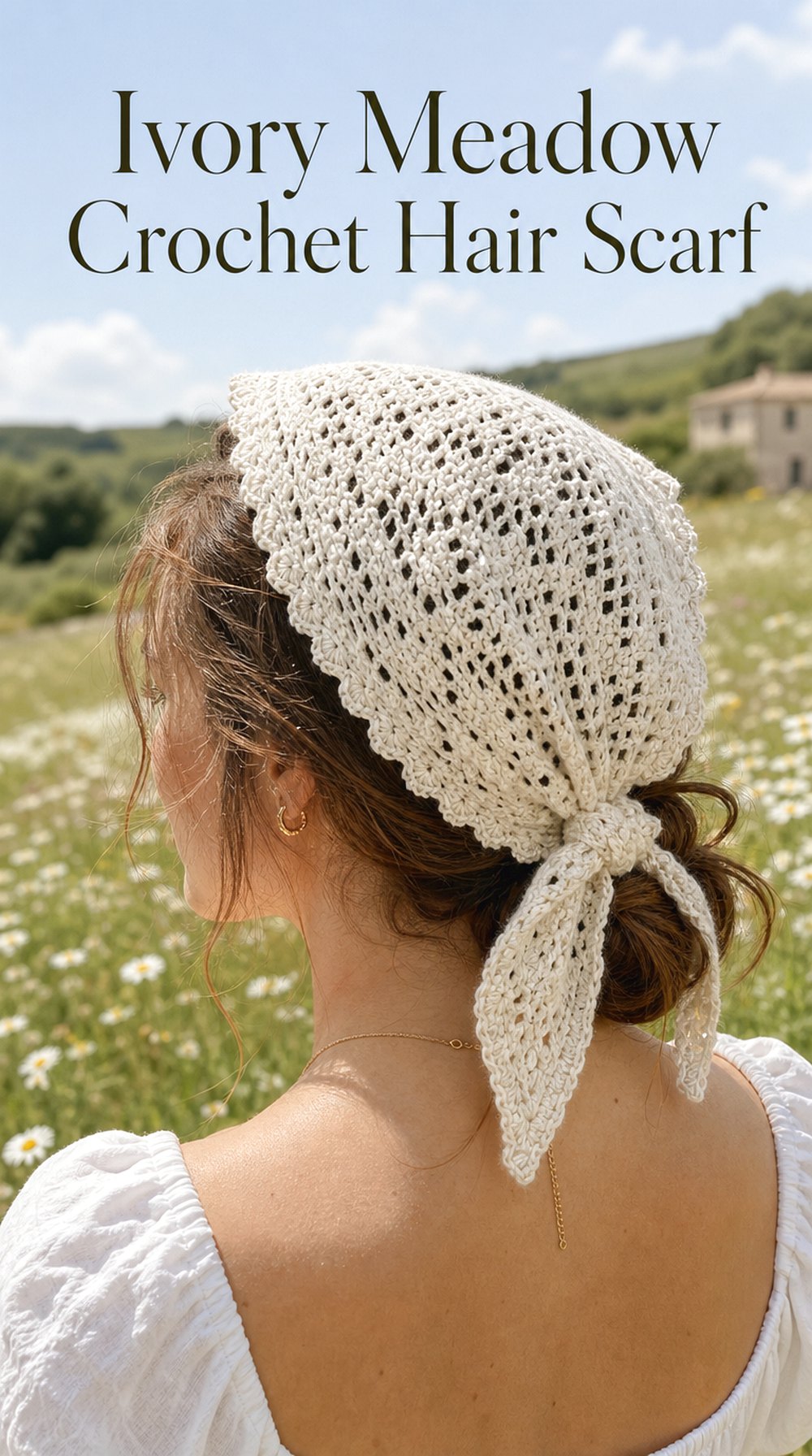
1. Ivory Meadow Crochet Hair Scarf
 Save
SaveSoft ivory gives a crochet hair scarf the quiet simplicity associated with linen dresses, whitewashed interiors, and countryside wildflowers. An airy triangular shape with light openwork and a restrained scalloped edge can feel romantic while still looking easy to wear. The neutral color also allows the stitch texture itself to become the main visual feature.
Why This Look Works
Ivory keeps the overall silhouette light and versatile, so decorative stitches never feel visually crowded. Against brunette, blonde, gray, or red hair, the pale scarf creates enough contrast to make the crochet surface noticeable.
The meadow influence works best when it stays subtle. Rather than covering the scarf in decorative elements, a gentle border or occasional floral detail can carry the pastoral mood.
Texture Direction
Look toward openwork, softly defined motifs, or alternating areas of dense and airy texture. These contrasts give a single-color scarf more visual depth without requiring a complicated palette.
A lightly scalloped edge can soften the triangle further. For a cleaner interpretation, imagine the same ivory color with a simple straight border.
Outfit Pairing
This direction feels especially natural with washed linen, cotton blouses, simple summer dresses, straw accessories, and faded denim. Keeping the outfit neutral lets the crochet accessory provide the softer handcrafted texture.
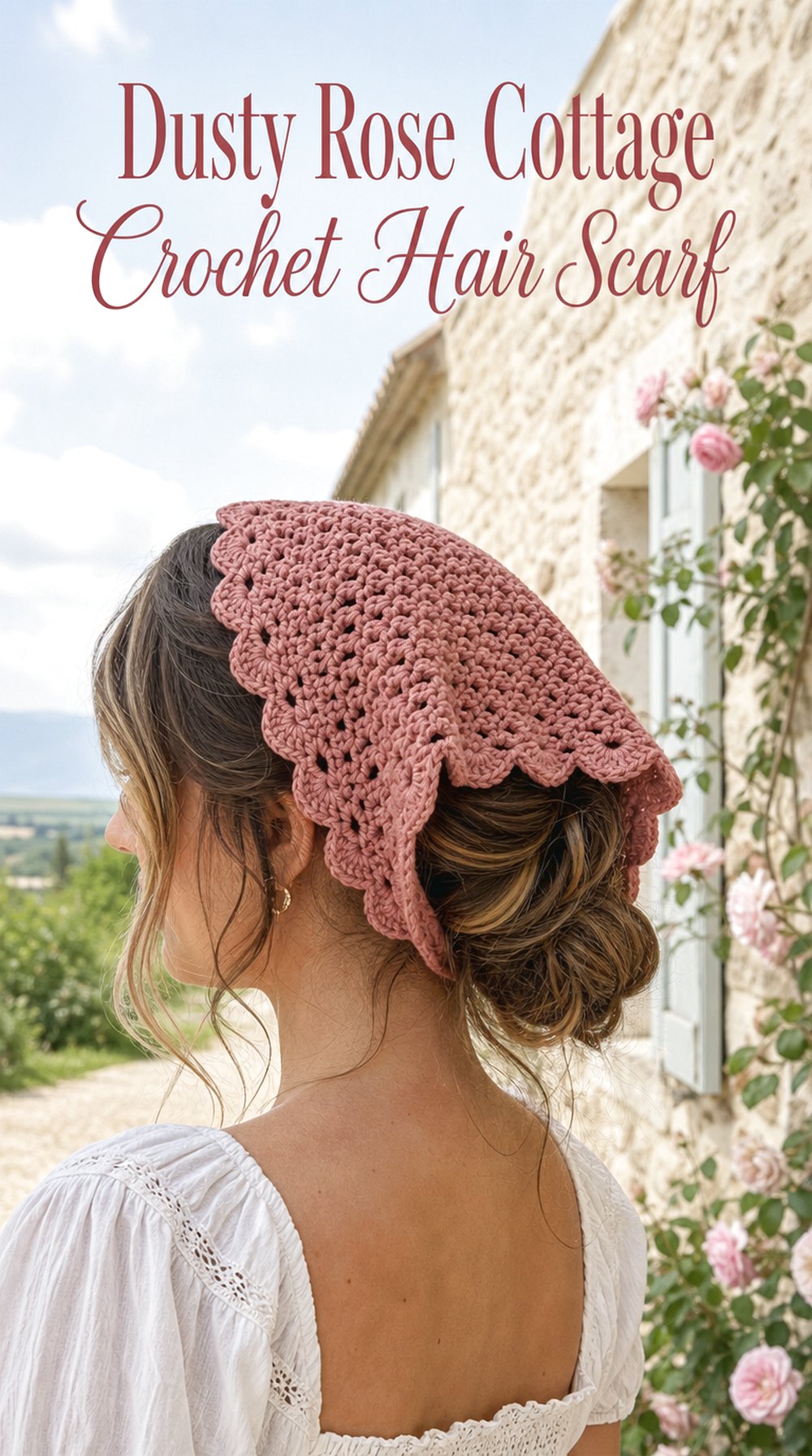
2. Dusty Rose Cottage Crochet Hair Scarf
 Save
SaveDusty rose brings the faded floral tones of an old cottage garden into a wearable crochet accent. Rather than a sugary pink, imagine a muted rose with gray or beige undertones. Paired with gentle scallops or small textural details, the color creates a romantic French-country mood that still feels grown-up and relaxed.
Color Mood
Dusty rose works beautifully beside cream, warm white, faded sage, soft brown, and worn denim blue. These quieter companions keep the scarf from leaning too bright or overly sweet.
For an even softer direction, shift toward blush-beige. A deeper antique rose gives the same concept a little more vintage weight.
Detail Worth Borrowing
A decorative border is especially effective here because the tonal palette is restrained. Small scallops, tiny picot-like visual details, or a narrow contrasting cream edge can make the outline more memorable.
The goal is visual delicacy rather than heavy embellishment. Leaving the center comparatively simple keeps attention on the silhouette.
Where This Look Fits
This style pairs naturally with romantic dresses, cottage-inspired blouses, garden outings, weekend markets, or casual spring and summer outfits. It can also bring softness to a plain white shirt and jeans.
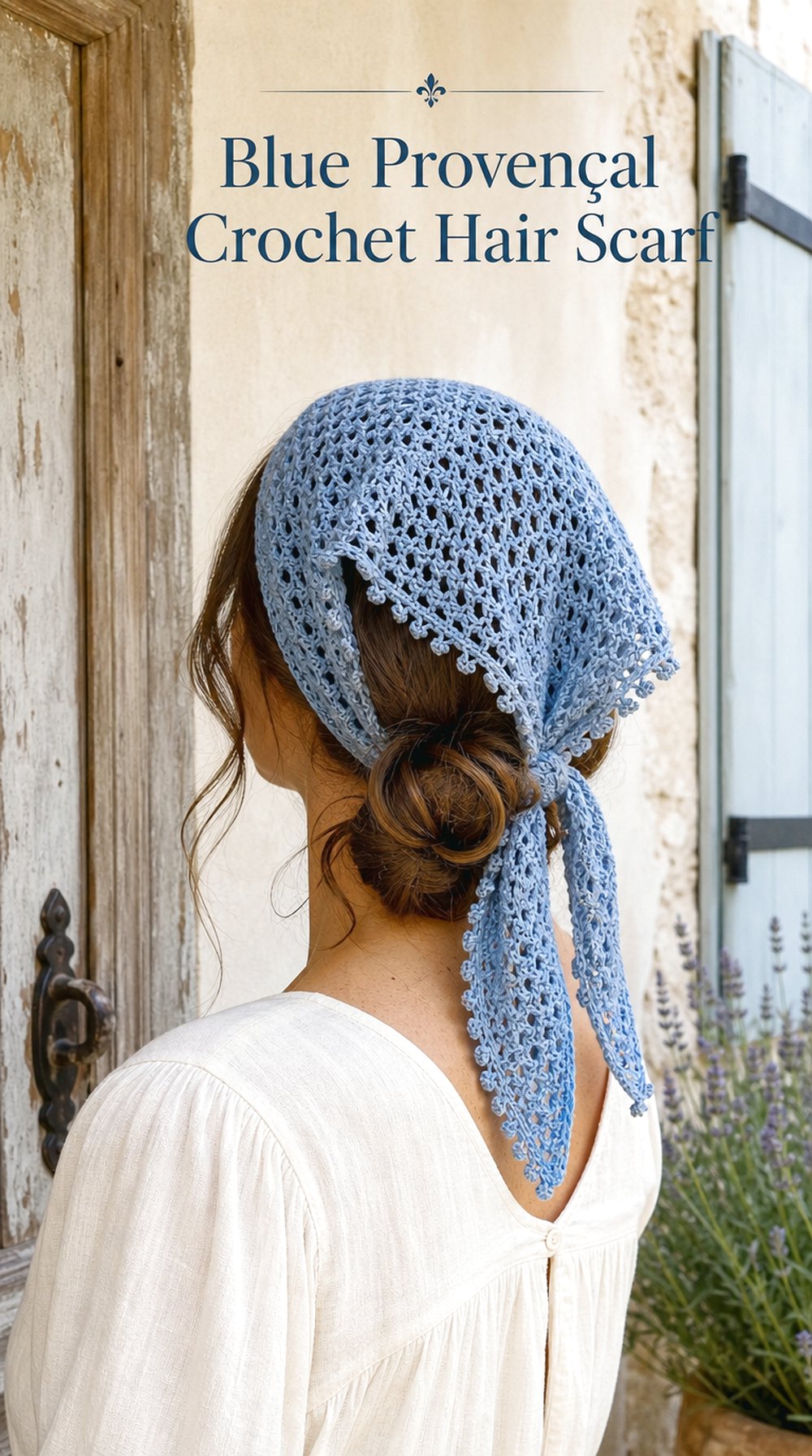
3. Blue Provençal Crochet Hair Scarf
 Save
SaveA faded blue hair scarf instantly suggests sunwashed shutters, pottery, clear skies, and relaxed countryside interiors. The best version feels softened rather than intensely saturated. A gently open crochet texture paired with a neat triangular silhouette creates a look that feels polished enough for town while still fitting easily into rustic styling.
Visual Balance
Blue naturally attracts the eye, so the crochet texture does not need excessive decorative detail. A clean field of stitches with a narrow patterned border often gives this color enough interest.
Longer-looking tie ends can emphasize the casual character. A compact knot, by contrast, gives the scarf a tidier, more refined profile.
Styling Direction
Pair faded blue with white cotton, cream linen, washed chambray, tan leather, or straw. This keeps the palette airy and lets the blue echo classic French-country decorating colors.
A blue-and-white outfit can feel especially cohesive when the fabrics remain simple and softly textured.
Modern Update
For a cleaner interpretation, imagine a slightly sharper triangular shape with minimal edging. The same countryside blue becomes noticeably more contemporary when the silhouette is streamlined.
4. Sage Herb Garden Crochet Hair Scarf
 Save
SaveMuted sage takes inspiration from rosemary, thyme, dusty leaves, and kitchen garden herbs rather than bright emerald greens. On a crochet hair scarf, the shade feels calm, earthy, and quietly distinctive. It suits both openwork and more textural surfaces, making it a flexible choice for anyone drawn to natural French-country palettes.
Color Direction
Sage works particularly well with oatmeal, cream, clay, muted gold, and dusty rose. Together, these shades create a soft garden palette without appearing overly coordinated.
If you want more contrast, pair the sage scarf with crisp white. For a warmer result, place it beside beige or terracotta.
Texture Direction
A slightly organic texture suits this color well. Small repeating motifs, subtle raised stitches, or a softly patterned border can echo the irregularity of leaves and garden foliage.
Avoid letting every area compete for attention. One clearly defined textural feature usually gives the most graceful result.
Seasonal Twist
Sage can transition easily from spring through early fall. In warmer months it feels fresh beside white and linen; later in the year it takes on a more rustic character beside brown, rust, or heavier-looking layers.
5. Lavender Field Crochet Hair Scarf
 Save
SaveLavender is an obvious countryside reference, but a subdued dusty lavender keeps the look sophisticated. Against an airy crochet surface, the color can feel soft and nostalgic rather than themed. A graceful triangular shape worn over a braid or low bun reinforces the relaxed rural mood without needing extra embellishment.
What Makes It Stand Out
The interest comes from the combination of unusual color and delicate texture. Lavender is softer than purple but more distinctive than a standard neutral, giving the scarf an instant focal-point quality.
A narrow cream border can brighten the shade. Keeping everything lavender creates a more serene, tonal look.
A Softer Variation
Shift the palette toward lavender-gray, mauve, or faded lilac. These hues coordinate easily with oatmeal, ivory, pale blue, and muted green.
Small areas of openwork can reinforce the airy quality without making the scarf look visually busy.
Outfit Pairing
Try this mood with cream dresses, washed denim, pale gray knits, or floral prints containing small lavender accents. The scarf can either echo a color already present or act as the single soft accent in a neutral outfit.
6. Buttercream Picnic Crochet Hair Scarf
 Save
SavePale butter yellow captures the cheerful side of French-country style without drifting into bright primary color. On a small crochet scarf, it can resemble warm sunlight, faded table linens, and spring flowers. The shade looks especially charming when the crochet texture includes small motifs or a gently playful border.
Why the Palette Feels Fresh
Butter yellow sits comfortably between neutral and statement color. It brightens cream and beige outfits but still feels softer than lemon or mustard.
Pairing it with white, faded blue, or pale sage creates a picnic-inspired palette that stays light and wearable.
A Playful Direction
Small flower-like motifs or rounded edging can enhance the cheerful character. The scarf does not need many decorative features; even one playful detail can shift the entire mood.
For a quieter interpretation, imagine a plain buttercream triangle with a very simple edge.
Practical Style Angle
This color works especially well as a small accessory because it introduces warmth without dominating an outfit. It can bring life to white dresses, light denim, simple blouses, or neutral summer layers.
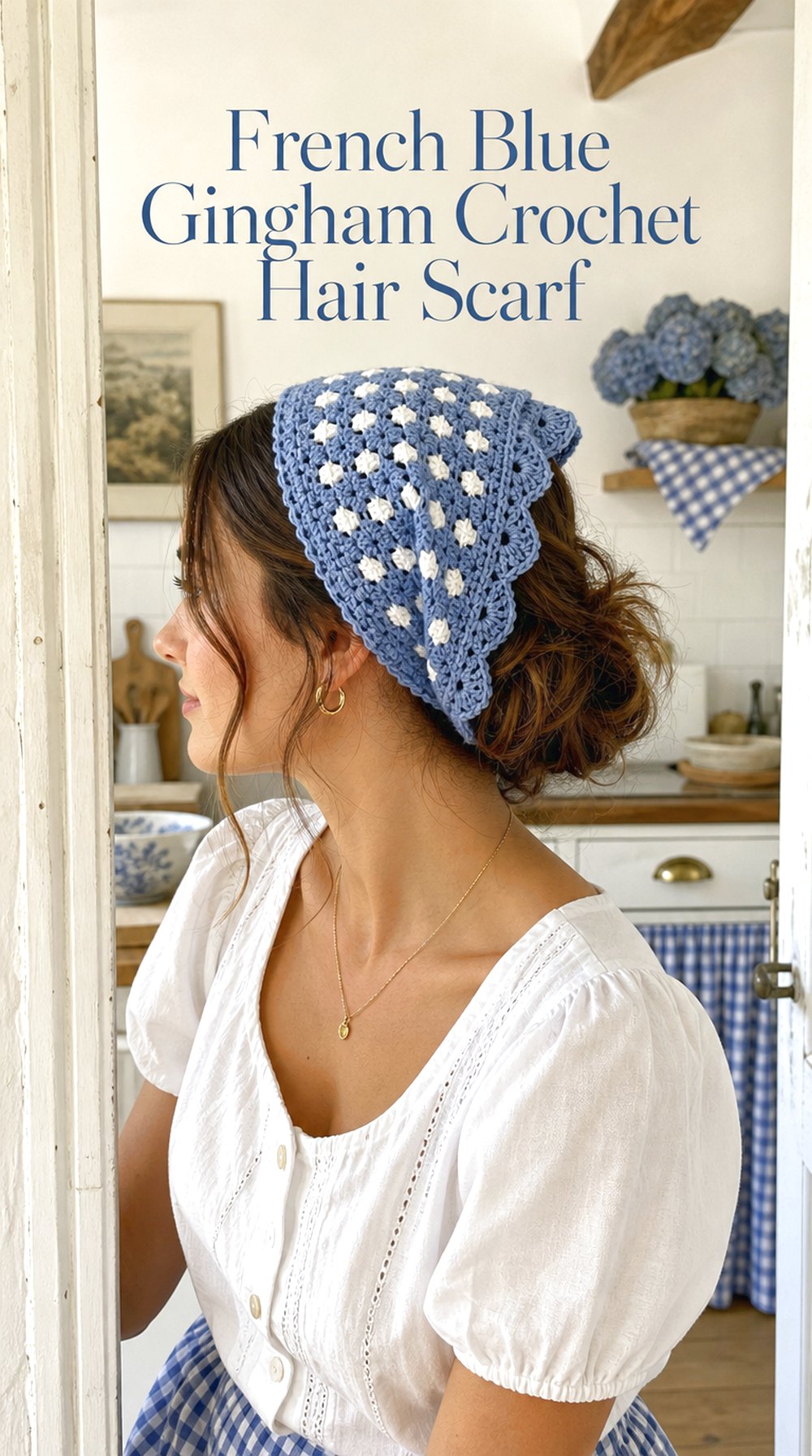
7. French Blue Gingham Crochet Hair Scarf
 Save
SaveThis concept combines the visual language of blue gingham with the texture of crochet rather than trying to make the scarf itself look exactly like woven checks. A French blue crochet triangle paired with gingham clothing or accessories gives the outfit a countryside café and farmhouse mood while keeping the scarf clearly textural.
Styling Direction
Let the crochet scarf provide solid or softly textured blue, then introduce gingham elsewhere through a blouse, skirt, ribbon, or picnic-inspired accessory. This creates visual variety instead of making every surface patterned.
White and cream are the easiest supporting shades.
Visual Focus
A clean triangle with an orderly border complements gingham particularly well. Because checks already create visual rhythm, a calmer crochet surface keeps the overall outfit balanced.
If the scarf contains motifs, consider keeping them subtle and repetitive.
Vintage-Inspired Touch
Faded rather than vivid blue helps the combination feel nostalgic. Soft cotton textures, straw, washed wood tones, and simple hair styling reinforce the rural character without making the outfit feel costume-like.
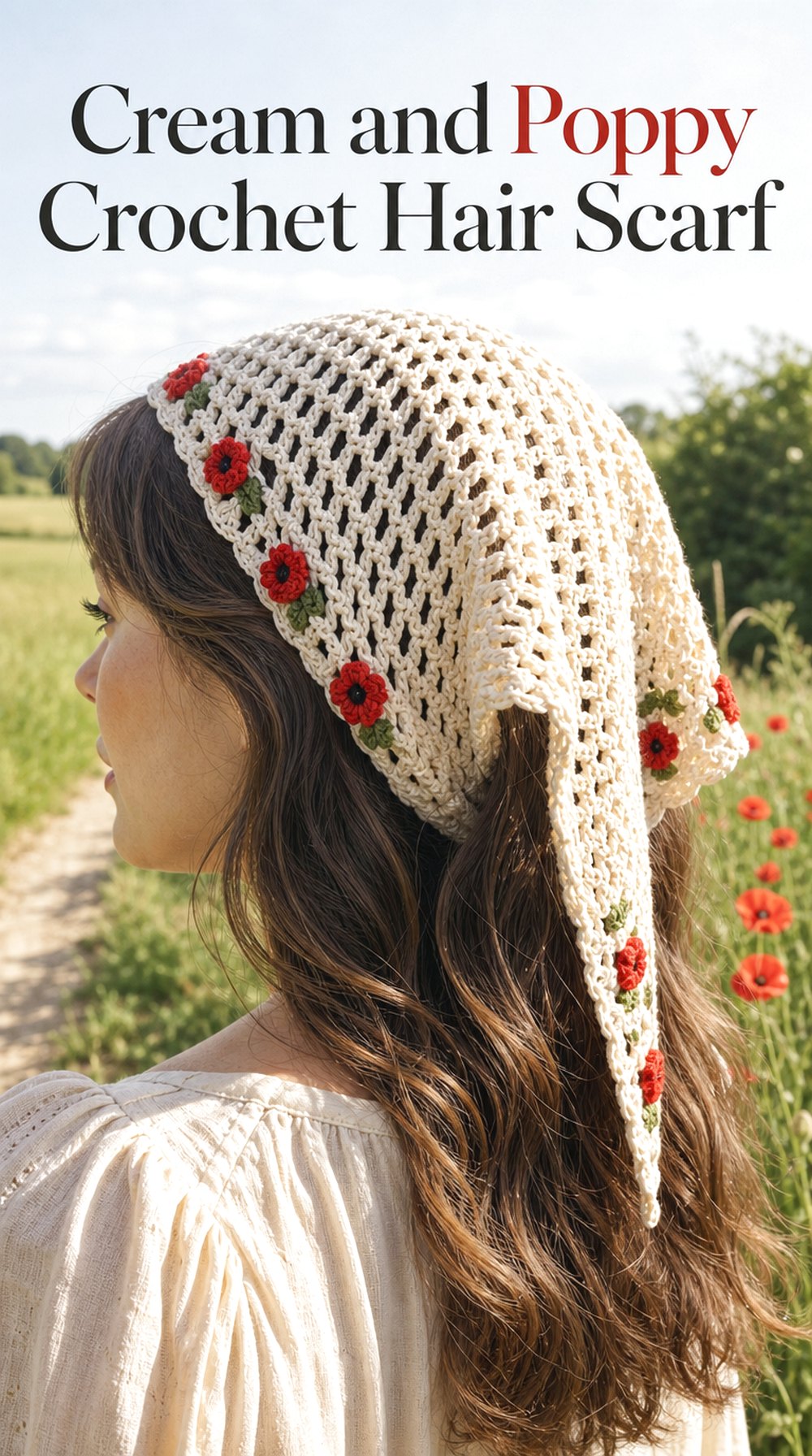
8. Cream and Poppy Crochet Hair Scarf
 Save
SaveCream with restrained red accents creates one of the strongest countryside contrasts in the collection. The scarf stays mostly neutral, while small poppy-inspired decorative details bring a flash of field color. This approach is ideal when you like floral crochet styling but want something quieter than an all-over multicolor motif arrangement.
The Detail That Changes It
Tiny red accents have much more visual impact against cream than they would against a darker base. Placing them sparingly allows each decorative detail to remain noticeable.
Green accents can be added visually for a botanical feel, but cream and red alone make the concept cleaner and more graphic.
Color Balance
Choose a red that feels softened slightly—poppy, brick-red, or muted scarlet rather than neon. The cream base keeps the scarf connected to linen, straw, and natural countryside tones.
A Cleaner Version
For a subtler interpretation, keep the scarf entirely cream and reserve red for the outfit, such as a tiny floral print or lip color. The same poppy-inspired palette remains visible without requiring decorative motifs on the scarf itself.
9. Oatmeal Farmhouse Crochet Hair Scarf
 Save
SaveWarm oatmeal gives crochet stitches a cozy, tactile quality that bright white cannot quite match. It references unbleached linen, grain sacks, rustic walls, and natural fibers, making it an easy choice for a farmhouse-inspired hair scarf. Slightly denser-looking texture can give this idea more substance than the lighter openwork concepts.
Texture Direction
Ribbed-looking lines, raised texture, or closely repeated motifs suit this earthy neutral particularly well. Because the color is quiet, shadow and stitch definition provide much of the visual interest.
A simple border can keep the scarf from feeling too decorative.
Everyday Version
Oatmeal is one of the easiest ideas to style repeatedly. It can sit comfortably beside denim, black, chocolate brown, olive, rust, cream, and faded blue.
This makes it a useful visual direction for anyone who prefers accessories that blend naturally into a wardrobe.
Visual Balance
If the scarf has stronger texture, keep its silhouette straightforward. A clear triangle and restrained ties prevent the neutral accessory from feeling bulky or visually heavy.
10. Wildflower Motif Crochet Hair Scarf
 Save
SaveA wildflower motif scarf brings more color and personality into the French countryside theme. Imagine a light neutral base scattered with small floral-inspired crochet details in dusty blue, faded rose, butter yellow, and leaf green. Keeping the motifs small and the palette muted makes the effect charming rather than overly busy.
Color Mood
Start with cream or soft beige so the flowers have a calm background. Muted shades work better for this mood than highly saturated rainbow colors because they resemble faded garden blooms.
Two or three floral colors can feel just as effective as a larger palette.
Motif Placement
Scattered details create a freer meadow effect, while motifs concentrated near the border give the scarf more structure. Another possibility is placing the strongest decorative interest near the pointed back section.
Each placement changes where the eye lands when the scarf is worn.
A Bolder Variation
For a more noticeable look, increase contrast between the neutral base and flower colors. Deep blue, poppy red, and olive can make the countryside theme richer while still retaining a traditional garden feeling.
11. Olive Grove Crochet Hair Scarf
 Save
SaveOlive green introduces a deeper, more grounded countryside mood. It feels less delicate than sage and works especially well when paired with an uncluttered crochet texture. The result can bridge rustic French styling and modern earthy wardrobes, particularly when the scarf has a defined triangular silhouette and relaxed ties.
Why This Look Works
Olive has enough depth to highlight the shape of the scarf without requiring extra color. It also pairs naturally with the stone, wood, straw, and linen tones associated with rural styling.
The color feels especially strong against cream or white clothing.
Modern Update
Keep the edge relatively clean and let the solid earthy color become the feature. A crisp outline can make olive feel contemporary rather than overly vintage.
Longer-looking tie ends can add softness without introducing additional decoration.
Seasonal Use
Olive moves easily into late summer and fall. Pair it with cream and tan during warmer weather, then introduce rust, chocolate, or charcoal as the season changes.
12. Antique Rose Crochet Hair Kerchief
 Save
SaveThis smaller kerchief-style direction has a distinctly vintage personality. Antique rose adds faded warmth, while a compact shape worn low over the crown gives the accessory a nostalgic old-village feel. Compared with broader scarves, the kerchief silhouette can appear lighter and more understated while still showing plenty of crochet texture.
Shape Inspiration
A smaller triangular profile leaves more hair visible and draws attention toward the border and ties. This makes the outline especially important.
A delicate edge suits the vintage mood, while a straight border can make the same color feel more modern.
Vintage-Inspired Touch
Muted rose works well beside faded floral prints, cream cotton, soft brown, and aged blue. Avoiding overly bright companion colors keeps the palette gently timeworn.
Where This Look Fits
This idea is especially appealing for cottage-style outfits, garden gatherings, vintage-inspired wardrobes, or simply adding color to a plain neutral blouse. The compact silhouette also works well when you want the scarf to feel like a finishing detail rather than the main statement.
13. Chamomile White Crochet Hair Scarf
 Save
SaveWhite crochet with restrained yellow floral accents creates a fresh cottage-garden look inspired by tiny chamomile blooms. It feels lighter and cleaner than the multicolor wildflower concept, with the emphasis on airy texture and small points of sunny color. A softly scalloped outline can reinforce the gentle floral mood.
Color Direction
Keep the yellow pale and warm rather than intensely bright. Creamy white, butter yellow, and a tiny amount of soft green create an especially cohesive palette.
For a simpler version, use only white and yellow.
Visual Focus
Because the palette is delicate, edging becomes an important design feature. Soft scallops can echo flower petals, while an open border adds airiness around the face and hair.
The scarf looks strongest when one detail is allowed to lead.
Spring Styling
This direction pairs beautifully with light denim, white cotton, pale sage, soft blue, and small floral prints. It naturally fits spring and summer wardrobes but can also bring brightness to neutral transitional outfits.
14. Terracotta Market Day Crochet Hair Scarf
 Save
SaveTerracotta adds warmth and rustic character inspired by earthenware pots, tiled roofs, warm stone, and baskets of produce. A crochet scarf in this shade feels grounded and practical rather than delicate. Textural stitches and a clear silhouette can make the color feel especially rich in natural daylight.
Color Mood
Terracotta pairs easily with cream, faded navy, olive, oat, and warm brown. It is especially effective when the rest of the outfit stays relatively neutral.
A softer clay shade feels casual; a darker rust-toned terracotta feels more autumnal.
Styling Direction
Imagine the scarf with a white blouse, straw market basket, worn denim, or a simple linen dress. Those natural materials reinforce the market-day character without needing decorative prints.
Seasonal Twist
Terracotta can move from late summer directly into fall. During warmer weather, combine it with white and straw. Later, surround it with olive, brown, or deeper cream for a richer countryside palette.
15. Soft Plum Vineyard Crochet Hair Scarf
 Save
SaveDusty plum offers a more dramatic alternative to the typical cream, blue, and rose French-country palette. The color recalls late-summer fruit, wine tones, and shadowed vineyard rows while remaining soft enough for everyday styling. A refined openwork texture keeps the deeper shade from feeling visually heavy.
Statement Element
Here, the color itself should carry most of the impact. Excessive motifs could compete with the depth of the plum, while a cleaner stitch pattern allows subtle shadows to show.
A narrow decorative edge is enough to finish the silhouette.
Color Pairing
Ivory, stone gray, faded sage, tan, and muted rose all soften plum effectively. For stronger contrast, pair it with pale cream.
Avoid adding too many other dark shades if you want to preserve the French-country lightness.
A Softer Variation
Mauve or dusty berry creates a gentler version of this concept. These softened alternatives still bring vineyard-inspired color while pairing more easily with spring and summer clothing.
16. Sunwashed Stripe Crochet Hair Scarf
 Save
SaveFaded stripes give the countryside theme a relaxed, collected-over-time quality. Instead of sharp nautical bands, imagine narrow lines of cream, muted apricot, faded blue, and sage that look softened by sun and wear. The changing colors give a simple triangular scarf plenty of personality without relying on floral motifs.
Visual Balance
Thin stripes generally keep the accessory light, while broader blocks create a stronger graphic statement. Mixing several narrow bands with larger neutral areas can prevent the palette from becoming too busy.
Color Direction
A successful sunwashed combination feels slightly desaturated. Cream acts as a resting point between blue, sage, apricot, or dusty yellow.
You could also reduce the concept to only two colors for a calmer striped look.
Creative Variation
Change the visual direction of the stripes by imagining them concentrated near the border, placed evenly across the scarf, or appearing as occasional bands. Each approach creates a different sense of rhythm.
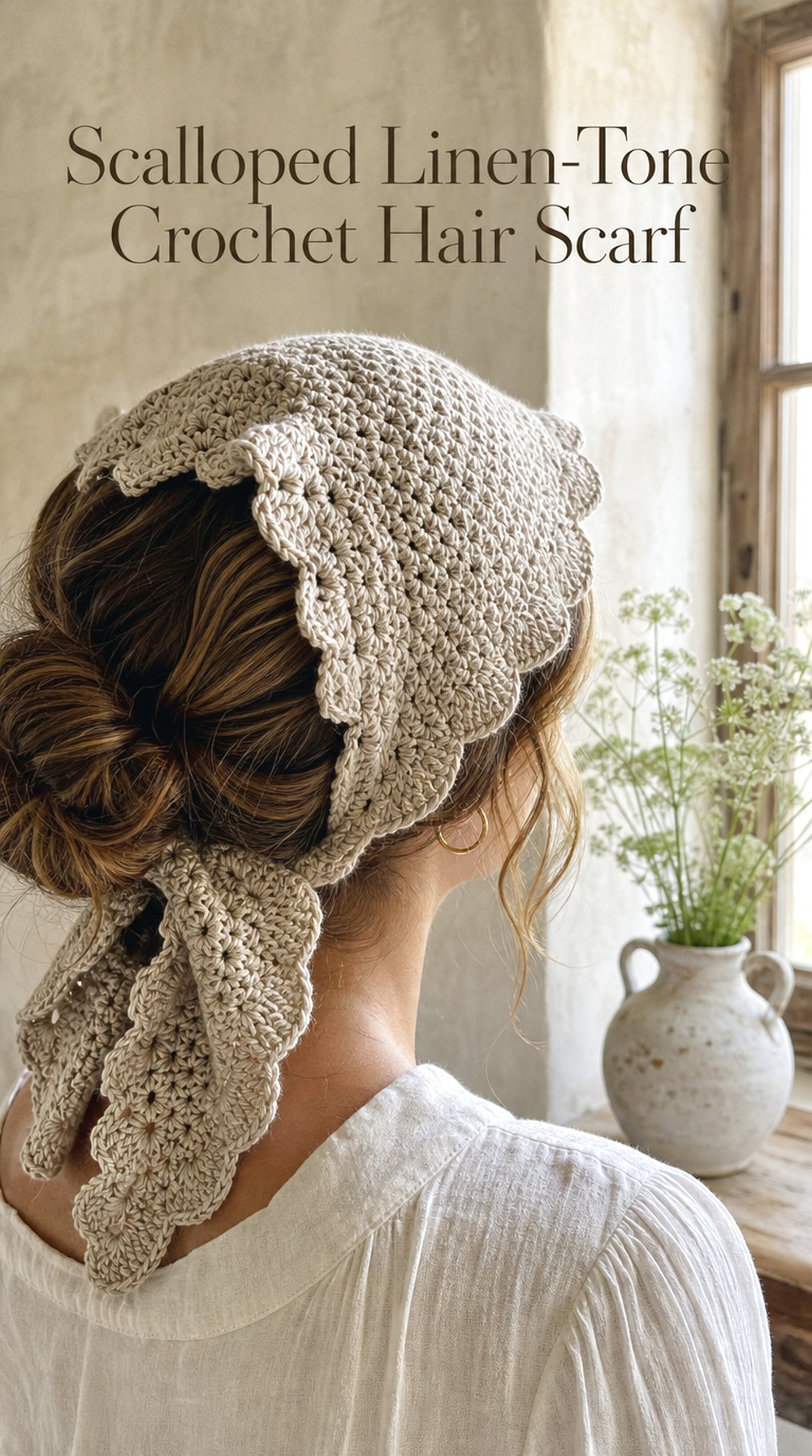
17. Scalloped Linen Tone Crochet Hair Scarf
 Save
SaveThis idea puts the border at center stage. A pale flax or linen-toned scarf stays intentionally neutral while a pronounced scalloped edge gives the silhouette graceful movement. It has the refined simplicity of a countryside interior where muted materials, handcrafted texture, and one decorative detail do most of the visual work.
Design Detail to Notice
The scalloped border creates a softer outline around the hair and is especially noticeable along the pointed back section. Because it already provides strong decoration, the central portion of the scarf can remain visually restrained.
A Cleaner Version
Reduce the scallops to a smaller, shallower curve for a minimalist interpretation. The linen color keeps even a decorative edge feeling calm and natural.
Where This Look Fits
This direction complements minimalist wardrobes, linen dresses, soft tailoring, vintage blouses, and neutral summer outfits. It is especially appealing when you want crochet texture to feel elegant rather than overtly playful.
Choosing Between the Looks
| Direction | Best visual match |
|---|---|
| Romantic and airy | Ivory Meadow, Lavender Field |
| Cottage floral | Wildflower Motif, Chamomile White |
| Classic French-country | Blue Provençal, French Blue Gingham |
| Earthy and understated | Sage Herb Garden, Oatmeal Farmhouse |
| Warm and rustic | Terracotta Market Day, Buttercream Picnic |
| Vintage | Antique Rose Kerchief, Dusty Rose Cottage |
| Stronger color statement | Soft Plum Vineyard, Olive Grove |
| Detail-focused | Scalloped Linen-Tone, Cream and Poppy |
| More playful color | Sunwashed Stripe |
French Countryside Color Inspiration
A few palette directions can help define the mood before you settle on a scarf concept:
- Stone Cottage: ivory, oatmeal, warm beige, faded blue
- Herb Garden: sage, olive, cream, muted clay
- Flower Meadow: dusty rose, lavender, butter yellow, soft green
- Village Market: terracotta, cream, denim blue, basket brown
- Vintage Linen: flax, antique rose, faded blue, soft white
- Vineyard Evening: dusty plum, stone gray, ivory, muted sage
Texture can be just as influential as color. Airy openwork feels romantic and summery, denser texture looks rustic and grounded, scallops add softness, while small motifs bring a more decorative cottage character.
Make the Idea Your Own
Start with the visual feature you notice first. If it is color, keep the silhouette simple and let the palette lead. If you love decorative crochet, stay with a restrained base color so motifs or edging have space to stand out.
You can also shift the overall personality through proportion and styling. A broader triangle makes the scarf more noticeable from behind, while a compact kerchief creates a smaller accent. Longer-looking ties feel relaxed; a tidy knot appears cleaner. Floral appliqué-style details, contrast edging, stripes, scallops, or a completely monochrome surface can each push the same basic countryside idea in a different direction.
Using the Inspiration
Save individual concepts according to the detail you want to remember rather than only the complete look. One idea might offer the right border, another the perfect dusty blue, and another a scarf silhouette that works with your preferred hairstyle.
The collection can also help with mood boards, seasonal palette planning, gift inspiration, outfit coordination, or comparing how floral, striped, neutral, and earthy crochet accessories create different moods.
Who These Ideas Are For
These ideas are useful for crochet lovers exploring hair accessories, cottage-inspired style, French-country palettes, romantic summer dressing, vintage details, or smaller wearable accents. They are also helpful if you are still deciding whether your preferred direction is minimal, floral, earthy, colorful, or softly nostalgic.
FAQ
Which colors create the strongest French countryside feeling?
Faded blue, ivory, flax, dusty rose, sage, lavender, terracotta, and oatmeal all fit naturally into the aesthetic. The key is usually choosing softened, slightly muted colors instead of highly saturated ones.
How can a crochet hair scarf look more modern?
Keep the silhouette crisp, simplify the edging, and use a limited palette. Solid olive, cream, flax, or faded blue with clearly defined crochet texture can feel modern while still retaining countryside warmth.
What makes a hair scarf feel more cottage-inspired?
Small floral motifs, gentle scallops, garden-inspired colors, soft stripes, and relaxed styling all strengthen the cottage mood. Pairing the scarf visually with linen, cotton, denim, straw, or subtle florals can deepen the effect.
Should the scarf match the outfit?
It does not need to match exactly. Often the most interesting styling comes from repeating just one color from the clothing or choosing a complementary earthy shade. A cream outfit with sage, lavender, blue, or terracotta can feel coordinated without looking overly matched.
Which ideas are easiest to style across seasons?
Oatmeal Farmhouse, Ivory Meadow, Olive Grove, Blue Provençal, and Scalloped Linen-Tone are especially flexible because their colors pair with many wardrobe neutrals. Seasonal character can then come from surrounding colors and layers.
How can I use several ideas without copying one complete look?
Borrow individual elements. You might combine the sage palette from one concept, the scalloped outline from another, and the compact kerchief silhouette from a third. Treat each example as a visual reference rather than a fixed formula.
Conclusion
French countryside crochet hair scarves can move from airy and romantic to rustic, colorful, or surprisingly modern depending on just a few visual choices. Start by choosing the feature that speaks to you most—perhaps faded blue, wildflower motifs, soft scallops, an oatmeal texture, or a warm terracotta accent. Save a few contrasting favorites, compare their silhouettes and palettes, and use the details you keep returning to as the foundation for your own creative direction.
